search-icon
Avian Life Above Water

The Global Reef Expedition surveys aim to document what is happening on our coral reefs below water level, but on transit to our dive sites and in between dives, it is hard not to notice the abundant sea birds that also depend on the ocean around the Tuamotu Islands.

Most commonly, the Calcutta is chased and sat on by brown boobies as the boat flushes flying fish to the surface, frigate (or robber) birds also hover menacingly above, waiting to steal their hard earned catch. Brown noddies, in partnership with small tuna, chase shoals of small fish around the harbour and near the reefs. Sooty terns delicately pluck their prey from the surface water, barely getting their faces wet!
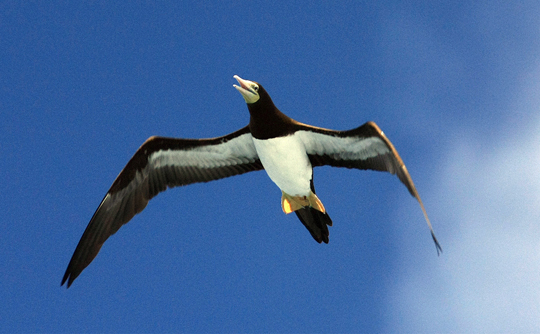
A booby flies overhead


These sea birds all depend on the ocean to feed and are affected by many of the same issues facing our coral reefs; variations in sea temperatures can affect their prey and therefore their feeding success and ability to raise chicks. With the abundant bird life around the islands, there seem to be plenty of sea birds around, but I am still waiting for a booby to sit on someone’s head!
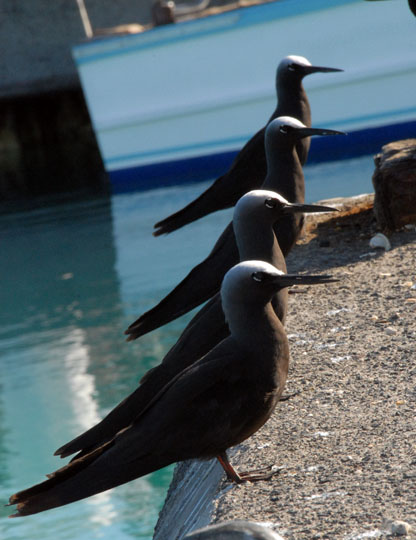
Sea birds in a row: Brown noddies lined up on the pier in Fakarava

(Photos by: 1 Serge Andrefouet, 2 Badi Samaniego)

If you liked this, you might also be interested in: A Day for the Birds, an article on seabirds from our Colombia mission.
Related Posts

2025-2026 B.A.M. Student Voices

Throughout the Bahamas Awareness of Mangroves (B.A.M.) and Jamaica Awareness of Mangroves in Nature (J.A.M.I.N.) programs, we evaluate each phase of the mangrove education and restoration process to better understand how students are learning, growing, and connecting with their coastal environments.

Before the programs begin, students share what they already know about mangroves and how they feel about them. As the program progresses, we continue to gather feedback to see how their knowledge evolves from identifying mangrove species and understanding food webs to recognizing the role mangroves play in coastal protection and climate change mitigation.

But the surveys go beyond science content.

We also ask students…

Read More

Ten Years of B.A.M.: Rooted in Partnership, Growing in Purpose

Ten years ago, the Bahamas Awareness of Mangroves (B.A.M.) program began with a simple but meaningful commitment: to connect Bahamian students with the mangrove ecosystems that shape and protect their island home.

Since 2015, B.A.M. has been implemented in partnership with Friends of the Environment, whose dedication to environmental stewardship in Abaco has made this program possible year after year. Together, we have worked alongside Patrick J. Bethel High School and Forest Heights Academy to bring hands-on mangrove science into classrooms and out into the field.

What makes ten years remarkable is not just longevity — it is consistency…

Read More