search-icon

Category: What we do

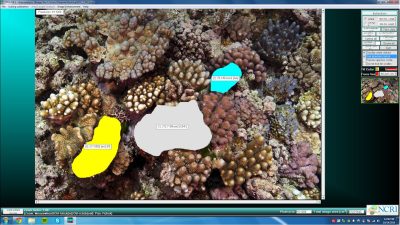
Area measurement mode using CPCe software to calculate organism surface area

Studying Reefs, Staying Dry

We collect enormous amounts of data and observations during our missions, a lot of which is collected in situ, or in its original place, by researchers while they’re underwater. But one of the things we do while underwater is take

Read More »
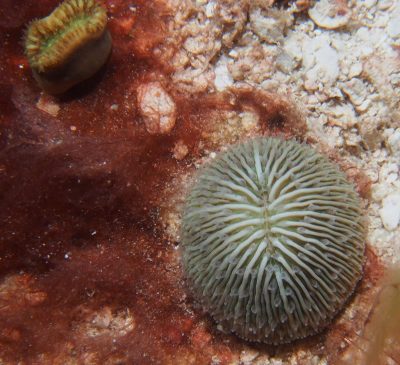
Fungia and Heteropsammia

Walking Corals

While most of the reefs we have surveyed in the Great Barrier Reef have an emergent reef flat, one of the northern reefs we were studying was fully submerged and quite difficult to locate.  After circling around our GPS coordinates

Read More »
Best Dive at the Great Barrier Reef

Best Dive

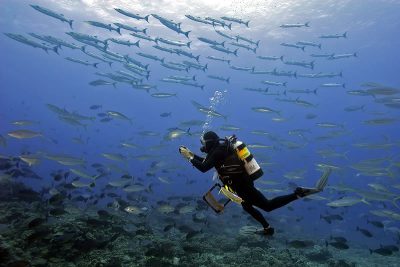
On every mission during the Global Reef Expedition survey divers can usually point to one dive as being the highlight of the trip. It might be a dive with lots of great looking healthy coral or maybe a dive where

Read More »
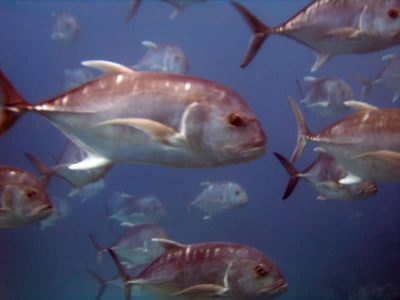
The school of giant trevally that chased off the barracudas.

Be Careful, They Don’t Travel Alone

If you ask someone “Why do fish school?” you will likely get “to avoid predators” for an answer. After all, the more eyes you have watching the harder it is for anything to sneak up on you. Furthermore, if a

Read More »
School of Humpback Snapper

Stories of a Fish Surveyor

Marine parks have been introduced worldwide to preserve biodiversity and protect important underwater habitats. Protected zones serve as baselines for undisturbed, natural ecosystems that can be used to measure the effects of human activities in other areas, and thereby help

Read More »
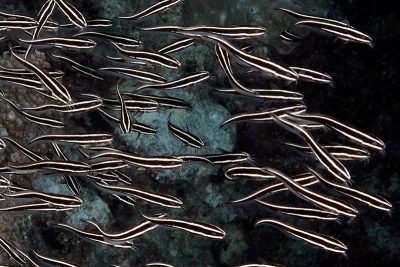
Eel Catfish of the Great Barrier Reef

Cool Catfish

The Great Barrier Reef… home to thousands of marine species. Dazzling coral reefs, majestic sharks, elegant manta rays, imposing groupers and cods, ancient giant clams, and rainbow coloured reef fish such as butterflyfish, angelfish and damsels. These are some of

Read More »
Ctenophore floating thru the water column.

Ctenophores Galore

Brightly colored sea stars are a regular occurrence on our survey dives. We only tend to notice them when we see a new and highly decorated species or dive a site where they are highly abundant. One survey dive we

Read More »
Blacktip Reef Shark

Sharks!

Sharks are a natural component of coral reef ecosystems, where they occupy the role of top-order predators. Reef sharks are important to the overall health of the coral reef assemblage, and their presence is generally an indication of a coral

Read More »
Olive sea snake hunts in crevices on the Great Barrier Reef.

Surprise Encounter with an Olive Sea Snake

Let me tell you about yesterday’s wonderful (seriously) sea snake encounter while it’s still fresh in my mind. First of all, up here in the northern Great Barrier Reef we’re getting close to saltwater crocodile territory.  They can grow to

Read More »