For thousands of years, Tongan fishing used traditional outrigger canoes known as popao. With modern technology, it is rare to see these traditional fishing boats and it’s even rarer to see traditional fishing gear being used; however, there are still some traditions that have survived.
Octopus Lure of Traditional Tongan Fishing
In the Tongan culture, octopus are eaten, sold, and given as gifts. Mainly, they are prepared by cooking them in coconut milk. In the Ha’apai Island group, where we have been working for the past few days, they are well known for exporting dried octopus for commercial and local markets.
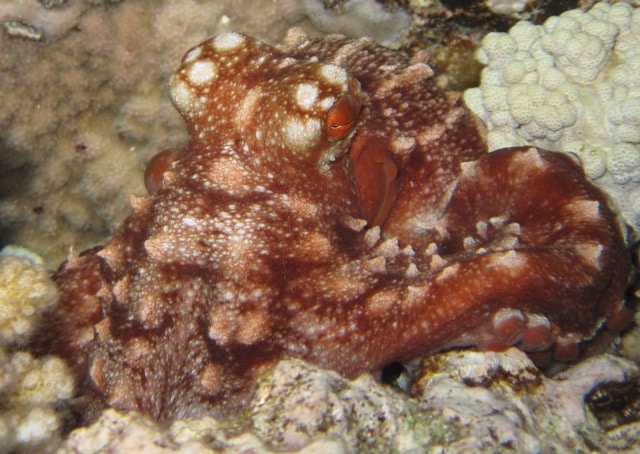
Day Octopus, Octopus cyanea
Traditionally, octopus were fished with a maka (stone or rock) feke (octopus). The maka feke is an octopus lure that has a shell tied onto the end of a rope. The rope is customarily made out of braided coconut fibers. When the Tongans used outrigger canoes, they would dangle the maka feke, or octopus lure, over the side of the boat and wait for the octopus to attack the shell mistaking it for prey. Additionally, they often attract the octopus by shaking the maka feke up and down near the reef mimicking swimming prey.
Maka Feke, Tongan Legend of the Octopus Lure
Many Tongan fishing techniques are based off of Tongan legend and myth. In Tonga, maka feke is also considered a legend. According to the legend, a rat was traveling by canoe. A storm arose and the rat’s canoe started to break up. Afraid, the rat looked for something to cling to and noticed an octopus in the water. The rat asked the octopus if he could take him to land. In return for the ride to land, the rat promised payment for his rescue … the ‘octopus lure.’
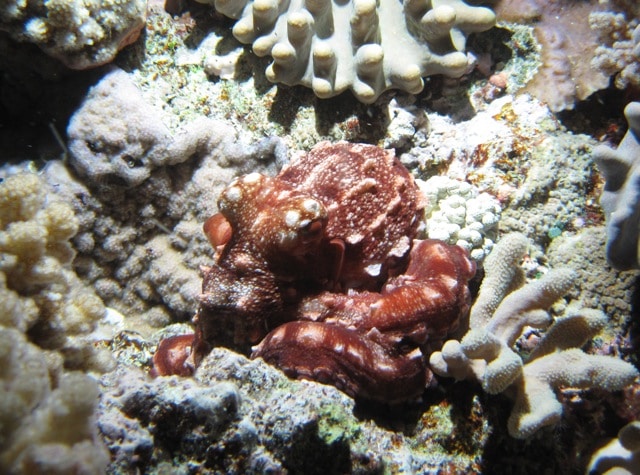
Day Octopus, Octopus cyanea
The octopus allowed the rat to sit on his head and took him to land. When the octopus was near shore, the rat jumped off and ran onto dry land. The rat tricked the octopus and refused to pay him. Out of revenge for the rat, the maka feke is shaped like a rat. The shell is meant to resemble the rats body, the rope its’ tale, and palm tree leaves are used for the legs.
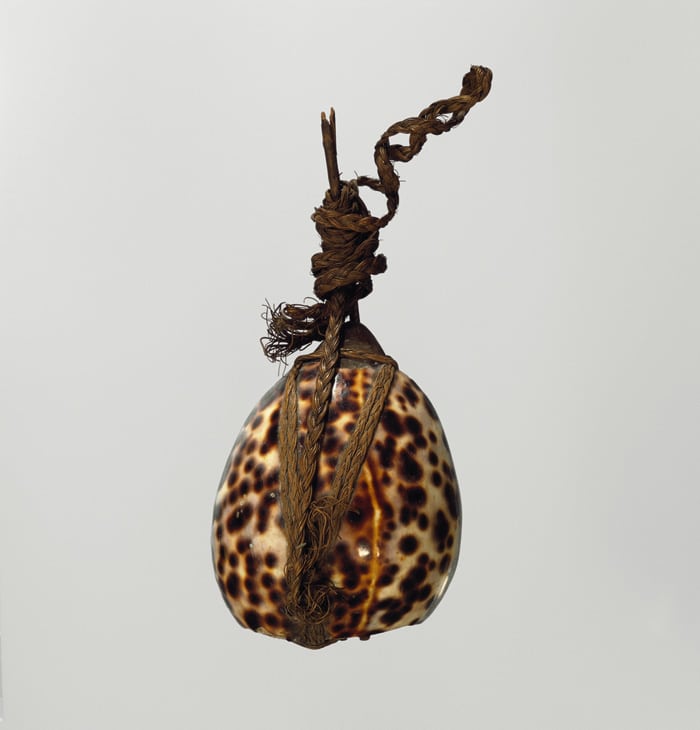
Here is a photo of a maka feke, the ‘rat’ of the Tongan legend. Traditionally it would also have palm fronds representing the legs of the rat. This is the octopus lure used in traditional Tongan fishing.
In schools, it is taught that the maka feke resembles evil and is a lure that is dangled in front of people… analogous to the octopus lure. That person then has to decide if they give into that evil.
Here is the refrain from the song that children in Tonga sing about the maka feke:
Feke na ko e fe ho kave valu
Oh Octopus where are your tentacles
He ko kumaa ‘eni ‘oku lau atu
Hear the rat chitchatting about you
Fā ki ho ‘ulu he ‘oku nganga’u
Wipe your head full of filthy liniment
Ka ko vaihi e ha’o toe ma’u au
No way on earth you can grab hold of me
Photos by: 1-2 Nate Formel; 3 https://encrypted-tbn3.gstatic.com/images?q=tbn:ANd9GcSyzxtpA7btlWzVadRkY0FtZY0fVWyRgUb_0w_TeGSAsliqPH_kpA