
search-icon
Finalists of the 2022 Science Without Borders Challenge (Ages 15-19)!

Last week, we proudly announced the finalists in the ages 11-14 category of our 2022 Science Without Borders® Challenge. Today, we are excited to announce the 15-19 year-old finalists of our art contest.

Contest finalists are from China, Indonesia, Korea, Thailand, the United Kingdom, and the United States. The theme, “Ridge to Reef” was portrayed in the students’ artwork through a variety of different actions such as planting corals, cleaning up pollution, preventing overfishing, and planting trees. We were amazed by these students’ creativity, execution of the theme, and artistic abilities.

Without further ado, please meet our 15-19 year old finalists:


"Pesticides and the Coral Reefs" by Sihao Qian, Age 16, China
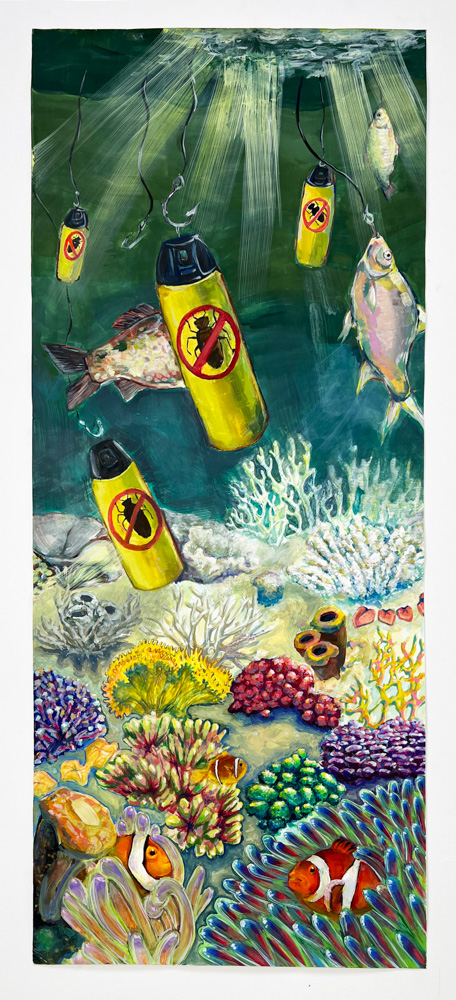
Image 10 of 17

ARTIST’S STATEMENT: Pesticide residues from agriculture flow into the ocean through rivers, and this type of harmful chemical pollutes the sea and kills many marine organisms. One of the biggest victim is the coral reefs. The fishers use pesticides as baits to catch the fish, and many hooks are scattered in the ocean. This not only causes overfishing, but also pollutes the ocean. In the top half of the drawing, the ocean has been contaminated with pesticides, so the surrounding coral reefs are bleaching and dying. In contrast, healthy marine life lives in the bottom half of the drawing, which is the unpolluted ocean. Ocean are not only an indispensable part of nature, but also the common wealth of mankind. I hope we can work together to protect our beautiful ocean.
Stay tuned! We will announce the winners in the next couple of weeks.


Related Posts

OceanImageBank_TheOceanAgency_Bleaching_16-scaled-1

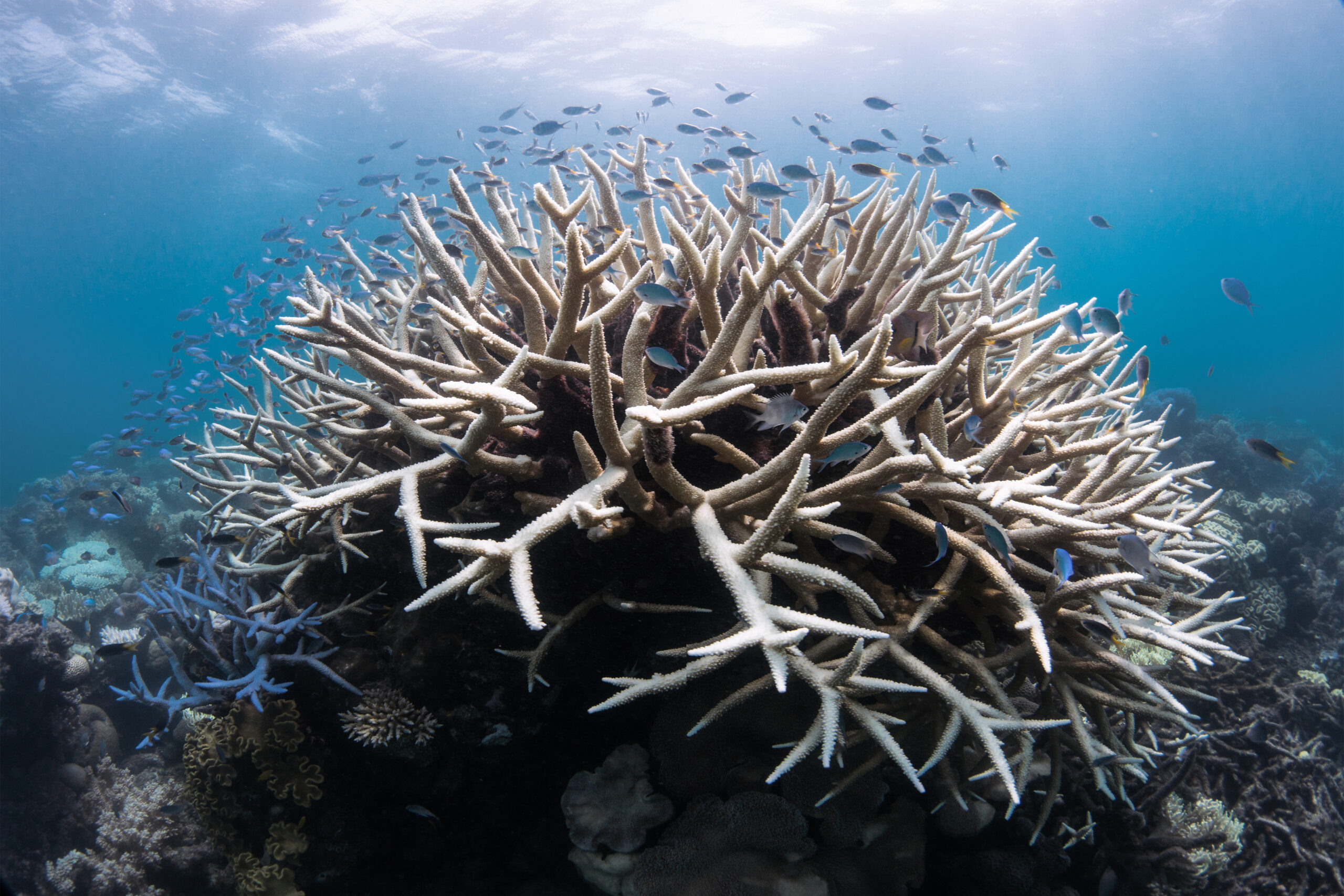
Coral Bleaching Awareness Month: Giving Coral Reefs a Chance to Recover

For hundreds of millions of years, coral reefs have supported life in our oceans. Although they cover less than 1% of the ocean floor, they provide habitat for at least 25% of all marine species. They also support people around the world by sustaining fisheries and tourism, providing food and livelihoods, and helping protect coastlines from waves and storms.

But coral reefs are under increasing pressure. Pollution, overfishing, coastal development, physical damage, and increasingly warm ocean temperatures can all affect reef health. One of the most visible signs that a coral reef is under stress is coral bleaching.

This September, in recognition of Coral Bleaching Awareness Month, we’re taking a closer look at what happens when corals bleach, why bleaching matters, and what scientists around the world are doing to better understand, protect, and restore coral reefs.

Read More

Everything You Need to Know About the 2027 Science Without Borders® Challenge

Are you ready to combine your creativity with ocean science?

The 15th Annual Science Without Borders® Challenge is now open! Whether you’re participating for the first time or returning for another year, this guide will help you get started.

This year’s theme, Navigate With Care, invites students to explore how responsible navigation helps protect both people and life in the ocean. Through your artwork, you can compete for scholarships and international recognition while inspiring others to protect both people and life in the ocean.

Read More
Privacy Overview

This website uses cookies so that we can provide you with the best user experience possible. Cookie information is stored in your browser and performs functions such as recognising you when you return to our website and helping our team to understand which sections of the website you find most interesting and useful.  You can view our complete Privacy Policy here.

Strictly Necessary Cookies

Most of our cookies are used to improve website security and reduce spam. These cookies should be enabled at all times. They also enable us to save your preferences for cookie settings.

3rd Party Cookies

This website uses Google Analytics to collect anonymous information such as the number of visitors to the site, and the most popular pages. Keeping this cookie enabled helps us to improve our website.