search-icon
How We’re Expanding Access to Ocean Education

Over the years, we’ve equipped teachers and students with a wide range of educational resources to foster a deeper understanding of coral reefs and mangrove ecosystems while aiding in increasing ocean literacy. Our Education Portal is the central hub for our Coral Reef Ecology Curriculum, but we also offer several additional programs and tools. For instance, our Mangrove Detectives citizen science initiative engages participants in hands-on exploration, while the Virtual Reef Expedition virtual reality app immerses students in coral reef zonation patterns and reef types. We provide an Ocean Odyssey Educator’s Guide to complement an educational IMAX film, and our most recent addition, the Reefs at Risk: Activity and Coloring Book, raises awareness about the threats coral reefs face. 

In the past year, we have been working with partners to expand the reach of the Reefs at Risk: Activity and Coloring Book by translating it into different languages. Given the increasing frequency and intensity of coral bleaching events due to climate change, educating children about these issues has become even more urgent. The book is now available in French and Spanish, with Arabic, Tahitian, and Thai translations currently underway.

To make our educational resources even more accessible, we’ve also undertaken the task of translating our educational videos. These videos, hosted on YouTube, are now available with closed captions in Arabic, German, French, and Spanish. The videos feature an auto-translate tool that allows captions to be translated into over 80 languages, ensuring that learners from around the world can benefit from this content.

KSLOF Educational Video Playlist

Below, you’ll find links to each of our educational videos. To access the closed captions, click on the settings gear icon, select “closed captions/CC,” and choose your preferred language. If your language isn’t available, select the auto-translate option for additional choices.

As we expand our educational resources, we remain committed to making them accessible to people worldwide. Understanding coral reefs and mangroves is key to protecting these vital ecosystems, and together, we can reach more learners and drive positive change for our oceans.

We’re always looking for volunteers to help us expand our global reach. If you’re fluent in a language and would like to contribute to translating our educational materials, please contact Amy Heemsoth at [email protected]

Educational Videos Available with Translations

What are Corals?

Where are Coral Reefs Found? 

Coral: What Does it Eat? 

Birth of an Atoll 

Coral Reef Zones 

Coral Reefs: Unraveling the Web 

Ocean Alert: Overfishing 

Corals: The Birds and the Bees 

Form Fits Function 

What is Ecology? 

Naming Nature 

Pollution: Everything is Connected 

Coral: What is it? 

Crown of Thorns Starfish Crisis 

Related Posts

From Students to Stewards: A Full-Circle Moment for J.A.M.I.N.

There are certain faces you never forget.

Over the years, hundreds of students have stepped into mangrove forests with us through the Jamaica Awareness of Mangroves in Nature (J.A.M.I.N.) program. I may not always remember every name, but I remember the expressions — the hesitation before stepping into thick mud, the laughter when someone loses a shoe, the look of surprise when they catch that unmistakable sulfur smell rising from the mangrove soil…

Read More

World Oceans Day: Protecting the Ecosystems That Protect Us

This World Oceans Day, the global community is being challenged to think differently about the ocean.

The 2026 World Oceans Day theme, “Reimagine: Beyond the World We Know, A New Relationship With Our Ocean,” invites us to recognize that the ocean is not something distant or separate from our lives. It regulates our climate, supports our economies, provides food for billions of people, and sustains the natural systems that make life on Earth possible.

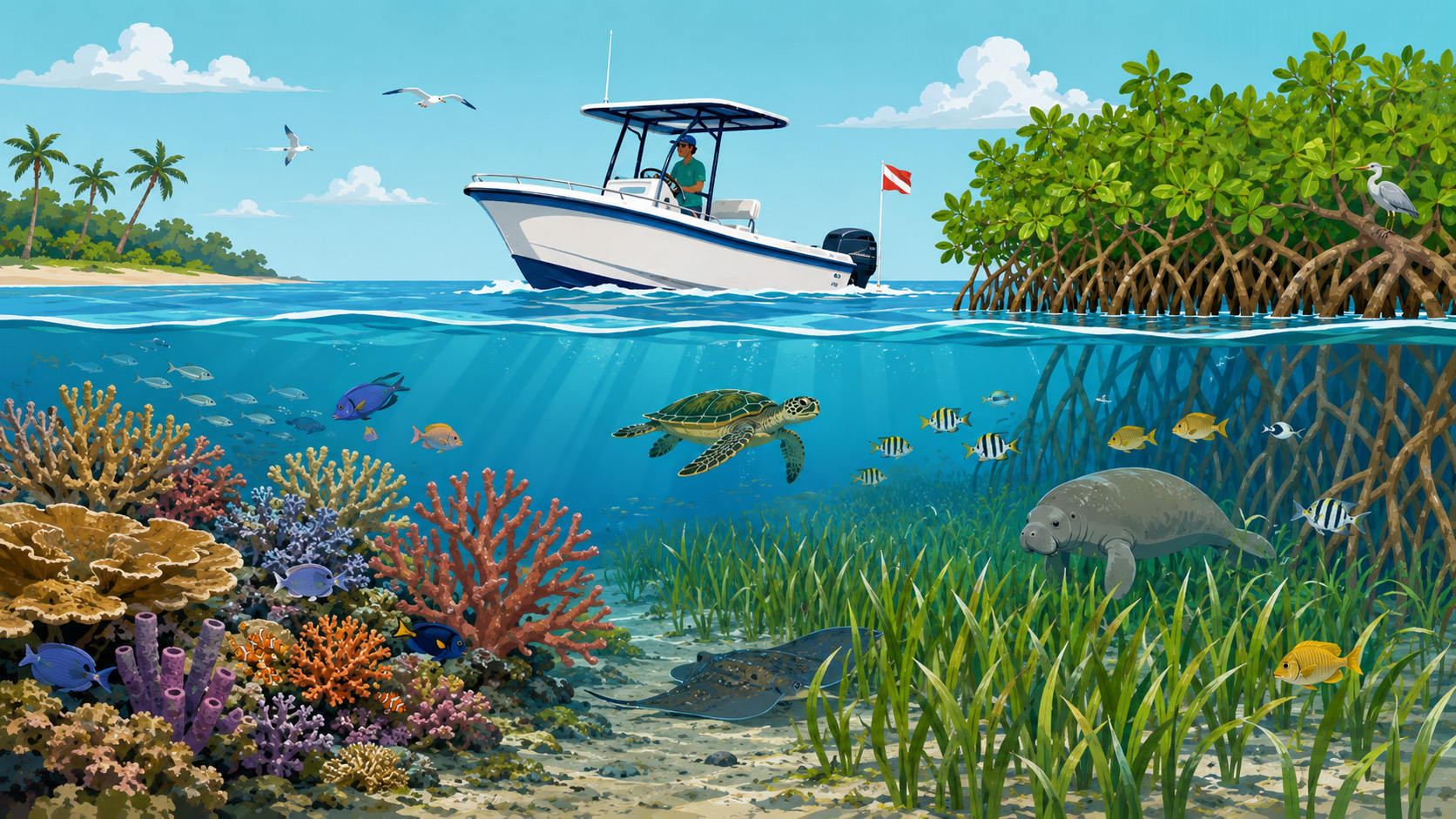
Few places illustrate this connection more clearly than the coastal ecosystems that protect our shores and support marine life. While coral reefs, mangrove forests, and seagrass meadows are often…

Read More
Privacy Overview

This website uses cookies so that we can provide you with the best user experience possible. Cookie information is stored in your browser and performs functions such as recognising you when you return to our website and helping our team to understand which sections of the website you find most interesting and useful.  You can view our complete Privacy Policy here.

Strictly Necessary Cookies

Most of our cookies are used to improve website security and reduce spam. These cookies should be enabled at all times. They also enable us to save your preferences for cookie settings.

3rd Party Cookies

This website uses Google Analytics to collect anonymous information such as the number of visitors to the site, and the most popular pages. Keeping this cookie enabled helps us to improve our website.