In early October we partnered with the University of the West Indies (UWI) Discovery Bay Marine Laboratory to launch a new project as part of our Education program. We called it (J.A.M.I.N.), which stands for Jamaica Awareness of Mangroves In Nature.
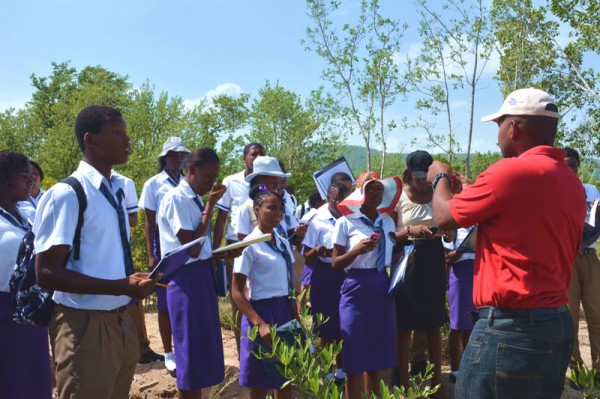
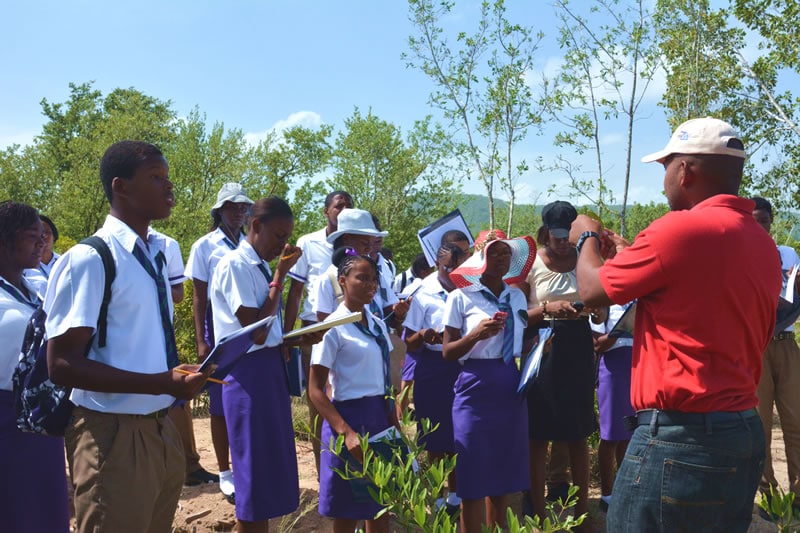
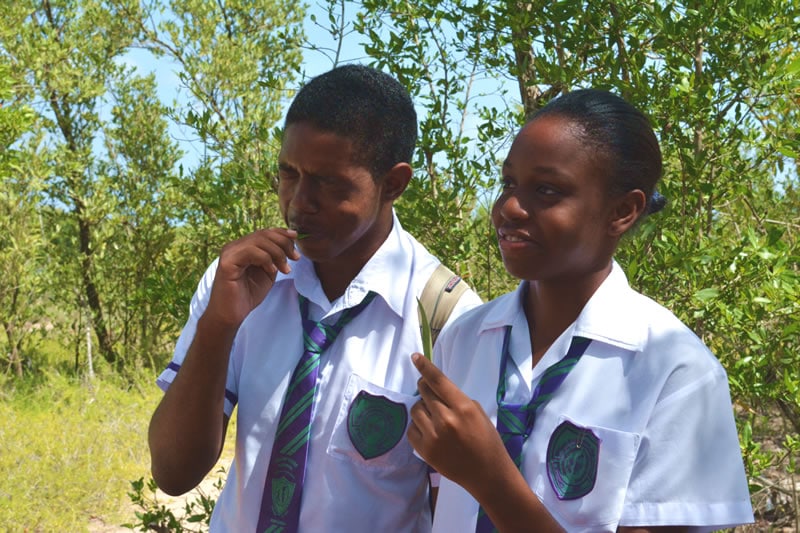
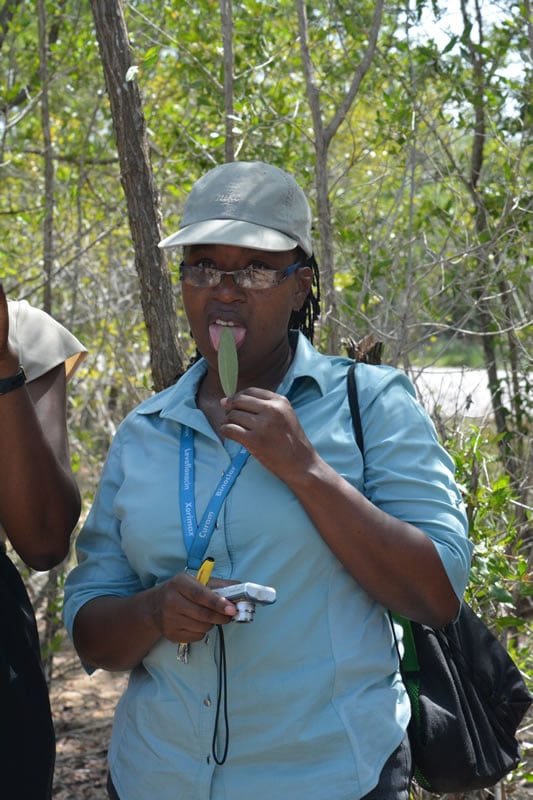
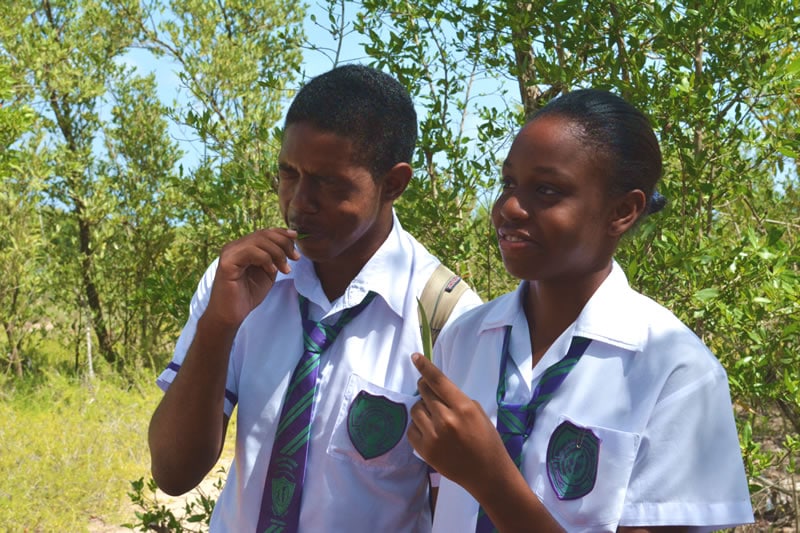
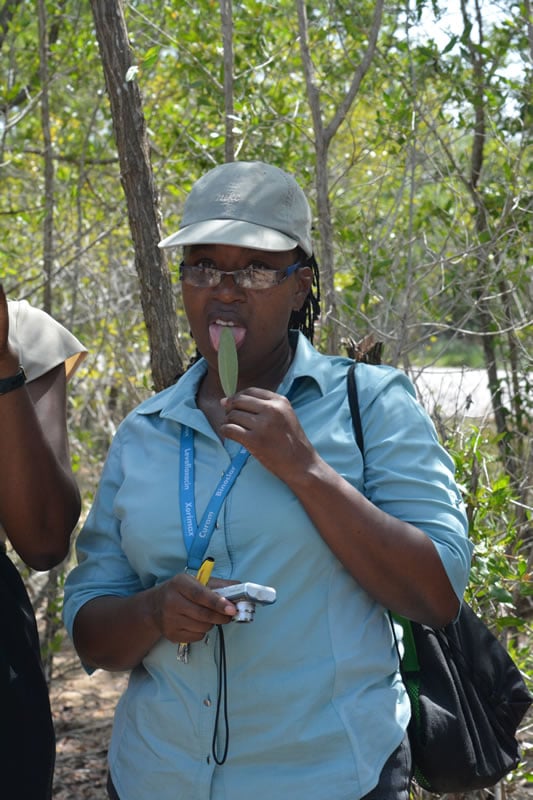
The project will last for a year, but it all started with a field trip to the Jamaican mangroves for local students from the Holland and William Knibb High Schools. Our Education Director, Amy Heemsoth led the program, “On the count of three put the mangrove leaf in your mouth. One, two, three! What did you taste?” asked Amy. “Salt!’ came the reply.
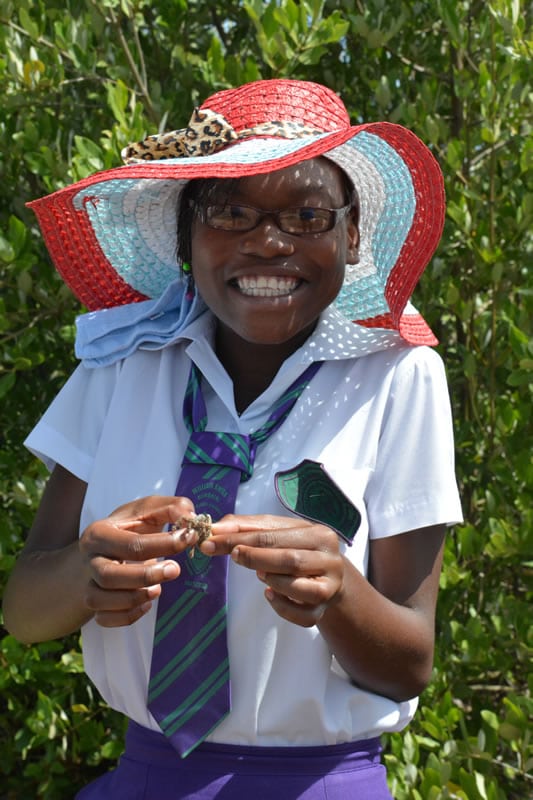
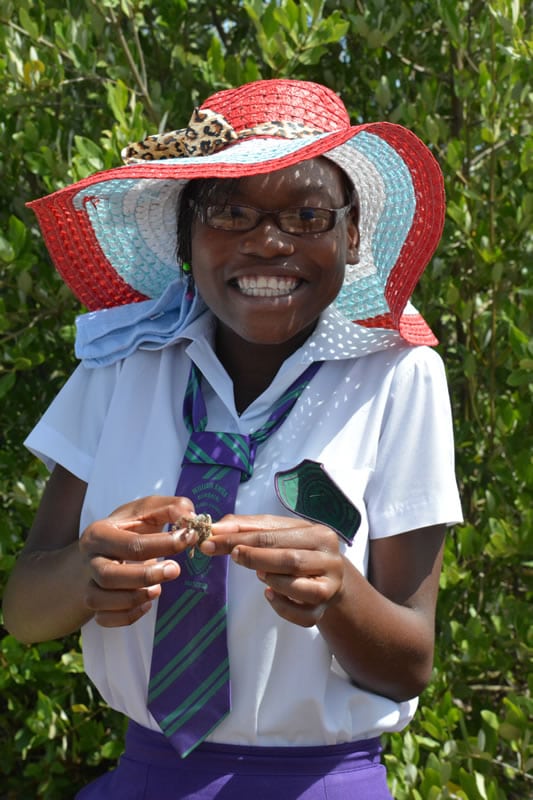
This is just one of the ways that students experience mangroves firsthand in the mangrove forest. On a guided walking tour through the mangroves, they made observations and sketched the different structures that are used to identify different species of Jamaican mangroves. The students interacted with nature in the mangrove forest and even held some of the animals that live there. “I’ve never held a crab before!” said a student from William Knibb high school. For many students, this was the first time that they experienced the mangroves and the plants and animals living in it.
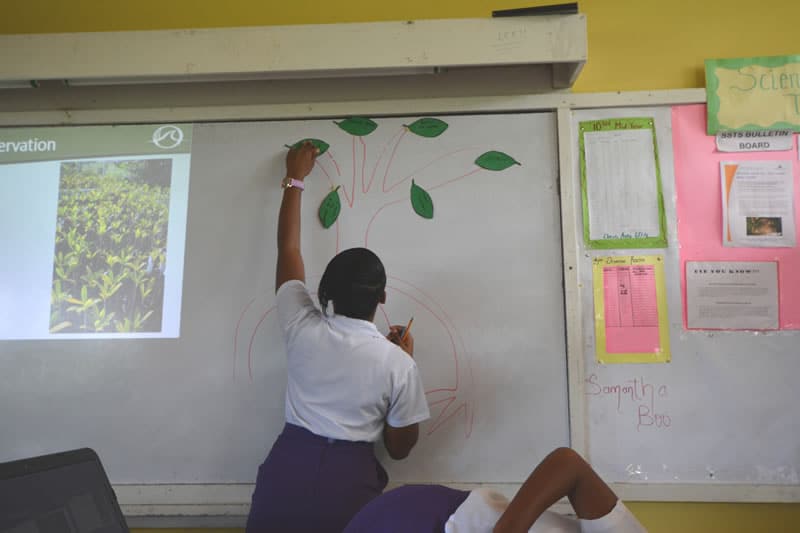
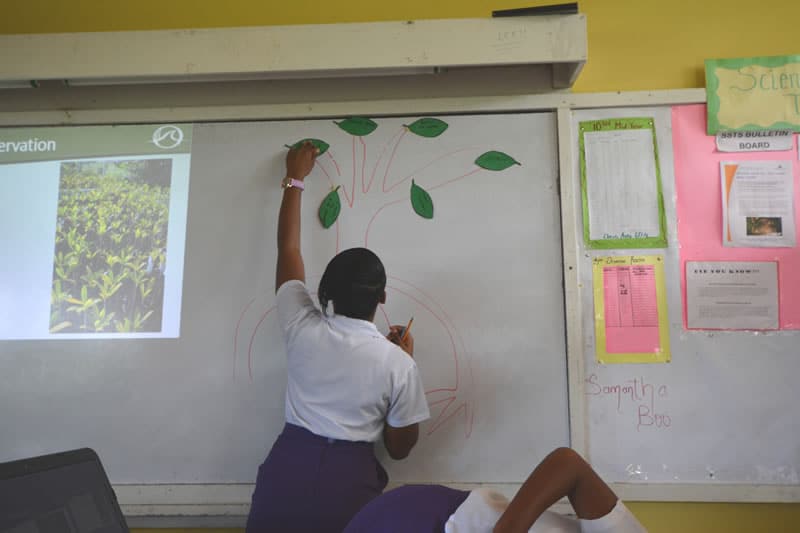
The students also learned in the classroom about mangrove distribution, types, Jamaican species, structures, and adaptations, as well as what threatens the future of mangrove forests in Jamaica and around the world. In addition, Amy gave the teachers resources and materials to continue the mangrove project and to keep teaching about the importance of mangrove forests.
“I am very happy that I have the opportunity to participate in this project. The teacher training has deepened my understanding of STEM-based project learning,” states William Knibb High School Science Teacher, Fulvia Nugent. She also says, “My students knowledge has grown tremendously on the importance of mangroves, the destruction to them, and the need for their restoration.”
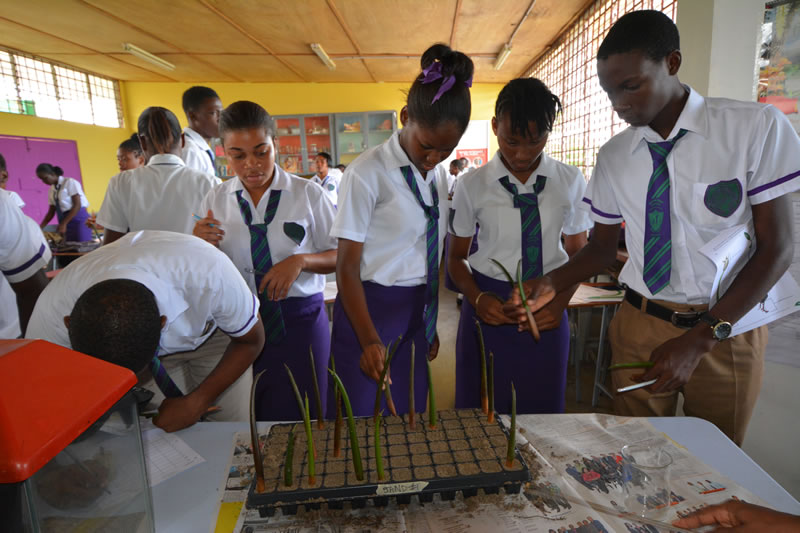
In order to help restore Jamaican mangroves, students will grow and monitor red mangrove propagules, a seed-like structure, in the classroom for the next several months before transplanting them to the UWI restoration site. While in the classroom students will plant the propagules in three different types of media (mangrove mud, sand, and pebbles) and measure them twice a week to see which ones grow best. This gives an added dimension to the project.
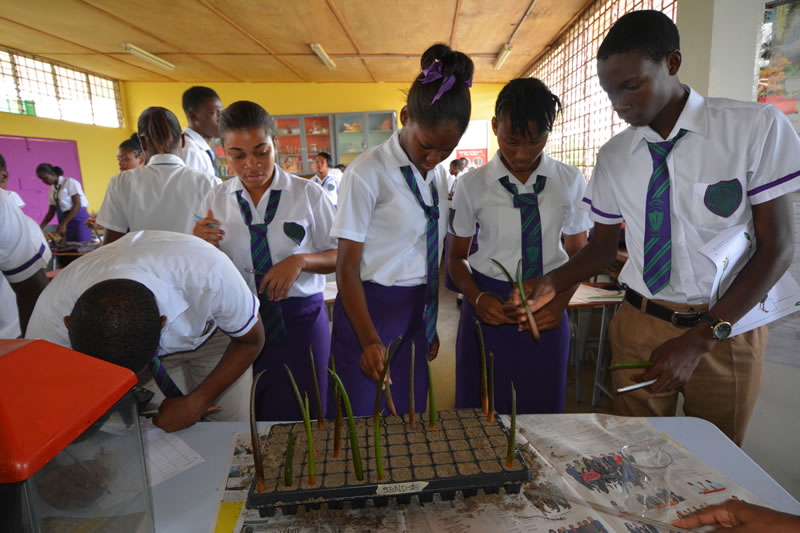
“Not only are students taking an active role in restoring mangroves, they are participating in a S.T.E.M. (Science, Technology, Engineering, and Math) activity that provides an opportunity to apply book knowledge to solve real-world problems,” said Phil Renaud, Executive Director of the Khaled bin Sultan Living Oceans Foundation.
Through this new initiative, the Foundation and UWI hope to inspire students in Jamaica to protect and conserve their mangroves and connected ecosystems.