
search-icon
Marchena

Our first coral reef research site was by the island of Marchena. Old black lava blankets the land and flows down beneath the waves. Underwater, the porous lava and a few species of branching coral create a complex habitat for large numbers of fish. The coral communities around the Galapagos contain only 21 species of coral.
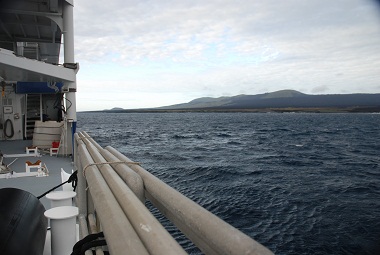
View of Marchena Island from the Golden Shadow

While there might not be a high diversity of corals, there is certainly a lot of life in these coral environments. One of the main contributing factors to the abundance of life around the Galapagos is the upwelling of deep nutrient rich waters. These nutrient rich waters stimulate the growth of phytoplankton which is the foundation for this extremely abundant ecosystem. Up around the islands of Darwin and Wolf (where we will be shortly) there are large schools of fish, hammerhead sharks and whale sharks which come to feed in the nutrient rich waters.
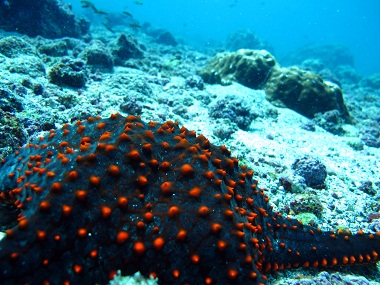
Cushion sea star
Cushion sea star


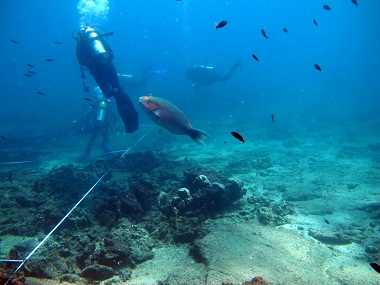
There is only one small area around Marchena that has an abundant coral community so only one day of work was required. The conditions underwater were good and the amount of information that was collected was impressive. The 14 scientific divers collected coral surveys, benthic surveys, fish surveys, coral genetic samples, coral growth and density samples, and long term coral monitoring data! We hope to be as productive when we hit Wolf Island.
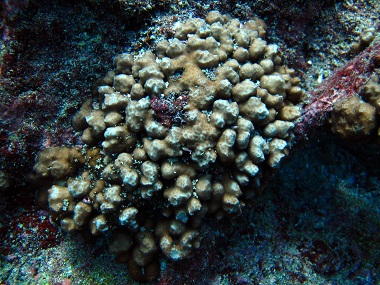
Psammocora stellata coral
Divers conducting coral surveys at Marchena Island

(Photos by: 1 Alison Barrat, 2-4 Brian Beck)

To follow along and see more photos, please visit us on Facebook!  You can also follow the expedition on our Global Reef Expedition page, where there is more information about our research and team members.
Related Posts

2025-2026 B.A.M. Student Voices

Throughout the Bahamas Awareness of Mangroves (B.A.M.) and Jamaica Awareness of Mangroves in Nature (J.A.M.I.N.) programs, we evaluate each phase of the mangrove education and restoration process to better understand how students are learning, growing, and connecting with their coastal environments.

Before the programs begin, students share what they already know about mangroves and how they feel about them. As the program progresses, we continue to gather feedback to see how their knowledge evolves from identifying mangrove species and understanding food webs to recognizing the role mangroves play in coastal protection and climate change mitigation.

But the surveys go beyond science content.

We also ask students…

Read More

Ten Years of B.A.M.: Rooted in Partnership, Growing in Purpose

Ten years ago, the Bahamas Awareness of Mangroves (B.A.M.) program began with a simple but meaningful commitment: to connect Bahamian students with the mangrove ecosystems that shape and protect their island home.

Since 2015, B.A.M. has been implemented in partnership with Friends of the Environment, whose dedication to environmental stewardship in Abaco has made this program possible year after year. Together, we have worked alongside Patrick J. Bethel High School and Forest Heights Academy to bring hands-on mangrove science into classrooms and out into the field.

What makes ten years remarkable is not just longevity — it is consistency…

Read More