
search-icon
Adventures in Chagos (BIOT)

‘Adventures in Chagos,’ posted in the Scripps Institution Coral Reef Ecology blog, was written by Samantha Clements, a science team member on the Living Oceans Foundation’s BIOT Mission earlier this year.

Adventures in Chagos
Adventures in ChagosCoral Reef Ecology Blog of Smith Lab at Scripps Institution of Oceanography
June 1, 2015
By Samantha Clements

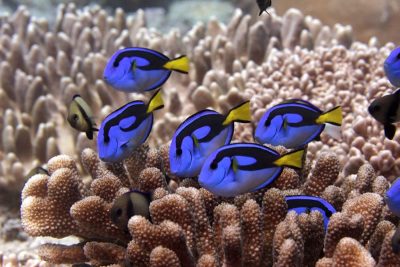
This year, during the months of March and April, I conducted coral reef benthic surveys for the Khaled bin Sultan Living Oceans Foundation (KSLOF) in Chagos. Chagos is the largest archipelago in the world and lies within the British Indian Ocean Territory. The islands of the archipelago are very far from any continents and have been uninhabited and protected since the 1970’s, and therefore provide a unique environment, free of local human impacts, to study coral reefs and the faunal communities they support.

Since Chagos is protected from fishing, fish from all trophic levels, from herbivores to planktivores and predators, are able to thrive in large numbers. Additionally, they often grow to be much larger than similar species in areas where fishing is allowed…
Related Posts

From Mangrove Mud to Meaningful Work: Desta’s J.A.M.I.N. Journey

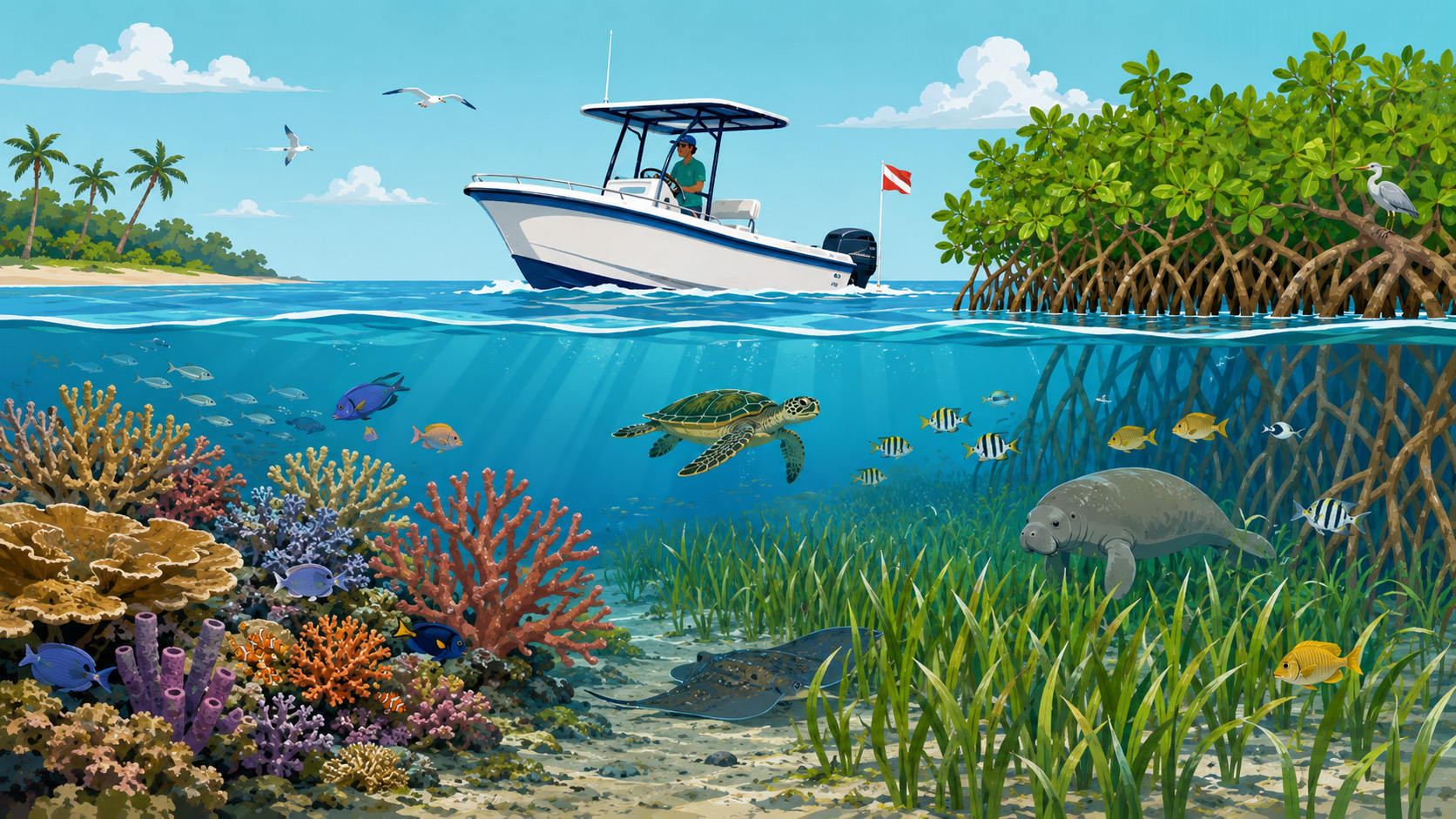
Some students I remember for their grades, their quick answers, or a moment that made the whole class laugh. Others I remember for the way they stepped into the mangroves.

Desta was the kind of student who thrived outdoors. While some students hesitated at the edge of the mud, he walked right in. And when he inevitably got stuck — because everyone does — he didn’t get frustrated. He laughed. Covered in mud, holding mangrove propagules in his hands, he embraced the experience fully.

Even then, it was clear that he was connecting with the environment in a way that went beyond the lesson plan…

Read More

From Students to Stewards: A Full-Circle Moment for J.A.M.I.N.

There are certain faces you never forget.

Over the years, hundreds of students have stepped into mangrove forests with us through the Jamaica Awareness of Mangroves in Nature (J.A.M.I.N.) program. I may not always remember every name, but I remember the expressions — the hesitation before stepping into thick mud, the laughter when someone loses a shoe, the look of surprise when they catch that unmistakable sulfur smell rising from the mangrove soil…

Read More
Privacy Overview

This website uses cookies so that we can provide you with the best user experience possible. Cookie information is stored in your browser and performs functions such as recognising you when you return to our website and helping our team to understand which sections of the website you find most interesting and useful.  You can view our complete Privacy Policy here.

Strictly Necessary Cookies

Most of our cookies are used to improve website security and reduce spam. These cookies should be enabled at all times. They also enable us to save your preferences for cookie settings.

3rd Party Cookies

This website uses Google Analytics to collect anonymous information such as the number of visitors to the site, and the most popular pages. Keeping this cookie enabled helps us to improve our website.