search-icon

Tag: COTS

We Need Better Coral Reef Management

Coral reefs are subjected to natural and human-induced disturbances, both of which can have a negative impact on the health of the ecosystem. Examples of human caused disturbances include pollution, destructive fishing practices, overharvesting animals for the aquarium trade, among

Read More »

Managing a COTS Outbreak

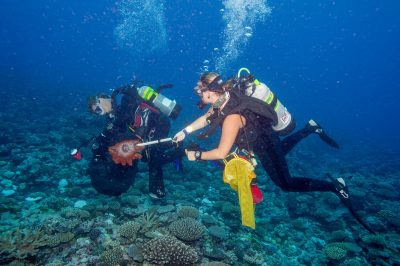
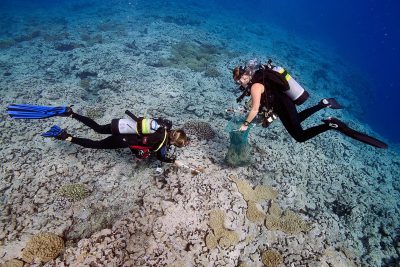
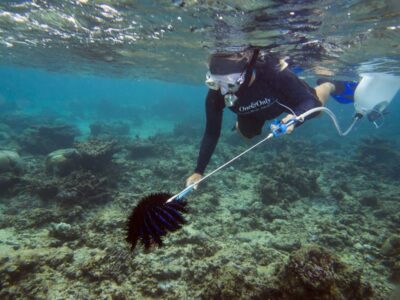
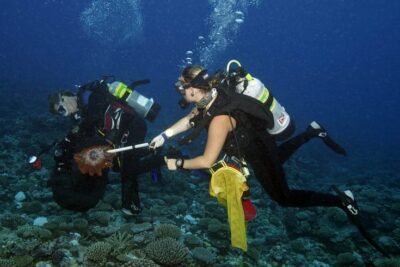
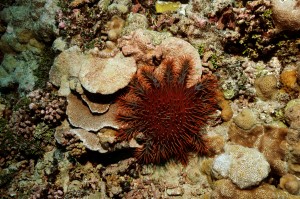
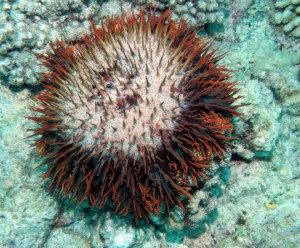
Best Management Practices Crown-of-thorns starfish (COTS) are naturally occurring organisms on the reefs of the Indo-Pacific Ocean that primarily eat coral. Finding a few COTS living on a coral reef is a normal and healthy part of the coral reef

Read More »

COTS: Aitutaki

In May 2013, when the science team of the Khaled Bin Sultan Living Oceans Foundation plunged into the waters surrounding Aitutaki in the Cook Islands, we discovered a reef in crises. Something had damaged between 80 and 99 percent of the island’s coral

Read More »

Killer Starfish

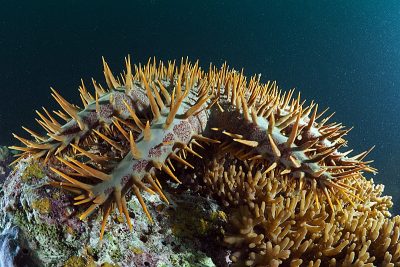
One of the most unusual group of animals found on the reef are the echinoderms.  So named because of their “spiny skin”, these animals are pentamerous or radially symmetrical (five point). Found only in the sea, they include sea urchins,

Read More »

Where’s the Coral?

Upon arrival in Rurutu we made a shocking discovery – the reefs were nearly devoid of living coral.  We learned that the island had been devastated by a bad outbreak of crown of thorns starfish (COTS outbreak) that occurred in

Read More »

Reefs Around Rangiroa, Aratika and Raraka

After two weeks, we’ve completed reef assessments around Rangiroa, Aratika, and Raraka and are now examining Fakarava. Tuamotu reefs are dramatically different from Society Islands.  Besides the near absence of crown of thorns seastars (we’ve seen a handful in the

Read More »

The Legacy Site – What Will the Future Tell?

The Khaled bin Sultan Living Oceans Foundation works on a global scale to improve our understanding of coral reef health and the ecological integrity of coral reef ecosystems. Pollution, coastal development, overfishing, climate change, disease, and predation can negatively impact

Read More »

Investigating the Reef Slope

For the last week, the Global Reef Expedition scientists have been diving and surveying the leeward side of fore reefs around Raiatea, French Polynesia, focusing their efforts on the reef slope. This particular reef community changes its structure along a

Read More »