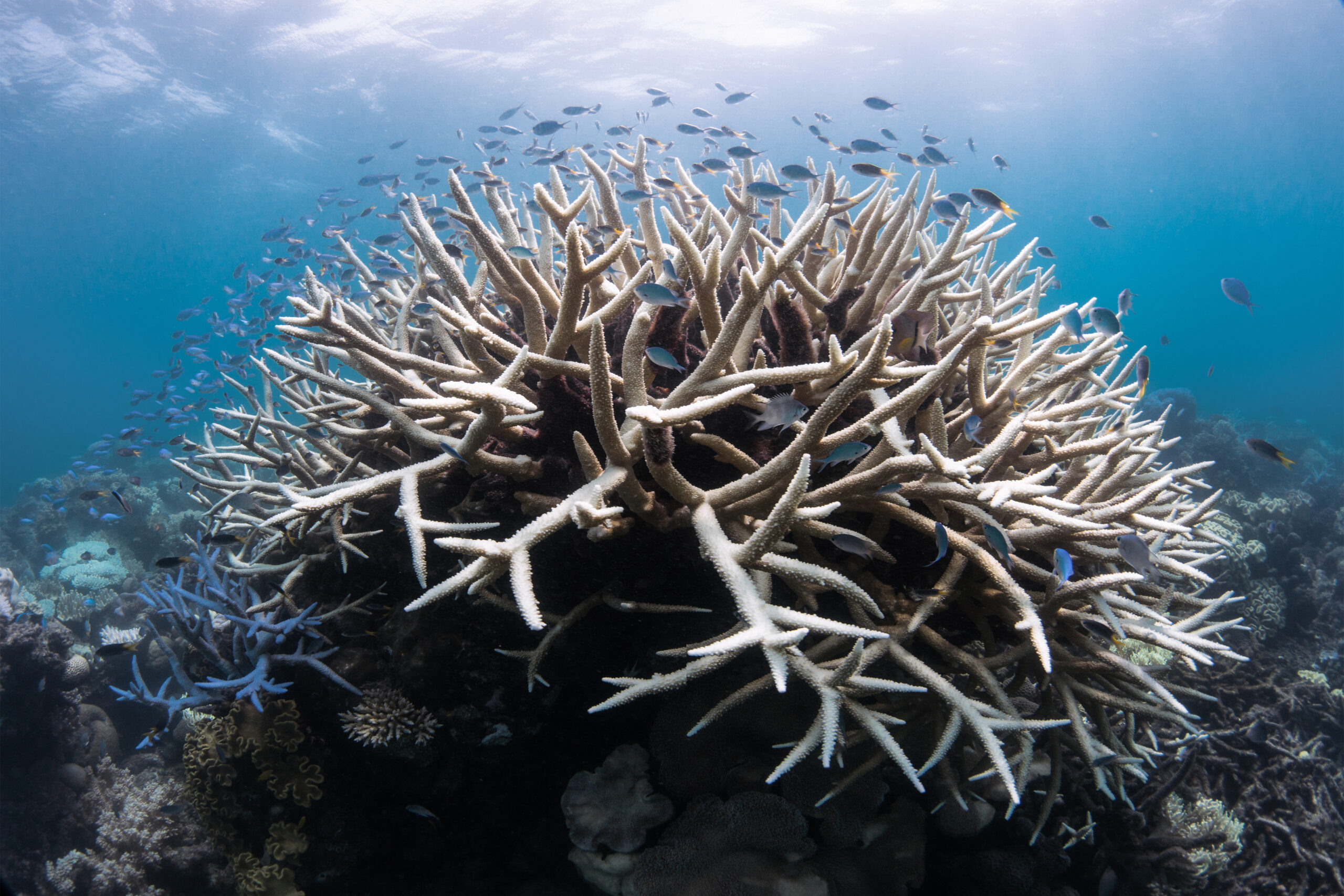
What Does Coral Eat?
While it is widely known that tropical corals have the ability to grow and prosper, thanks to the small algae (zooxanthellae) present in their tissue that capture light energy and make food through photosynthesis, corals are also voracious predators that feed on plankton and organic matter. Plankton caught in their tentacles or embedded in the mucus they secrete, bring them essential nutrients and energy necessary to build their strong skeleton.
One theory is that species that rely more on plankton may actually be more resistant to temperature increases predicted for the future. One of our researchers during the New Caledonia mission, Fanny Houlbreque, seeks to determine which coral species are the biggest consumers of plankton.
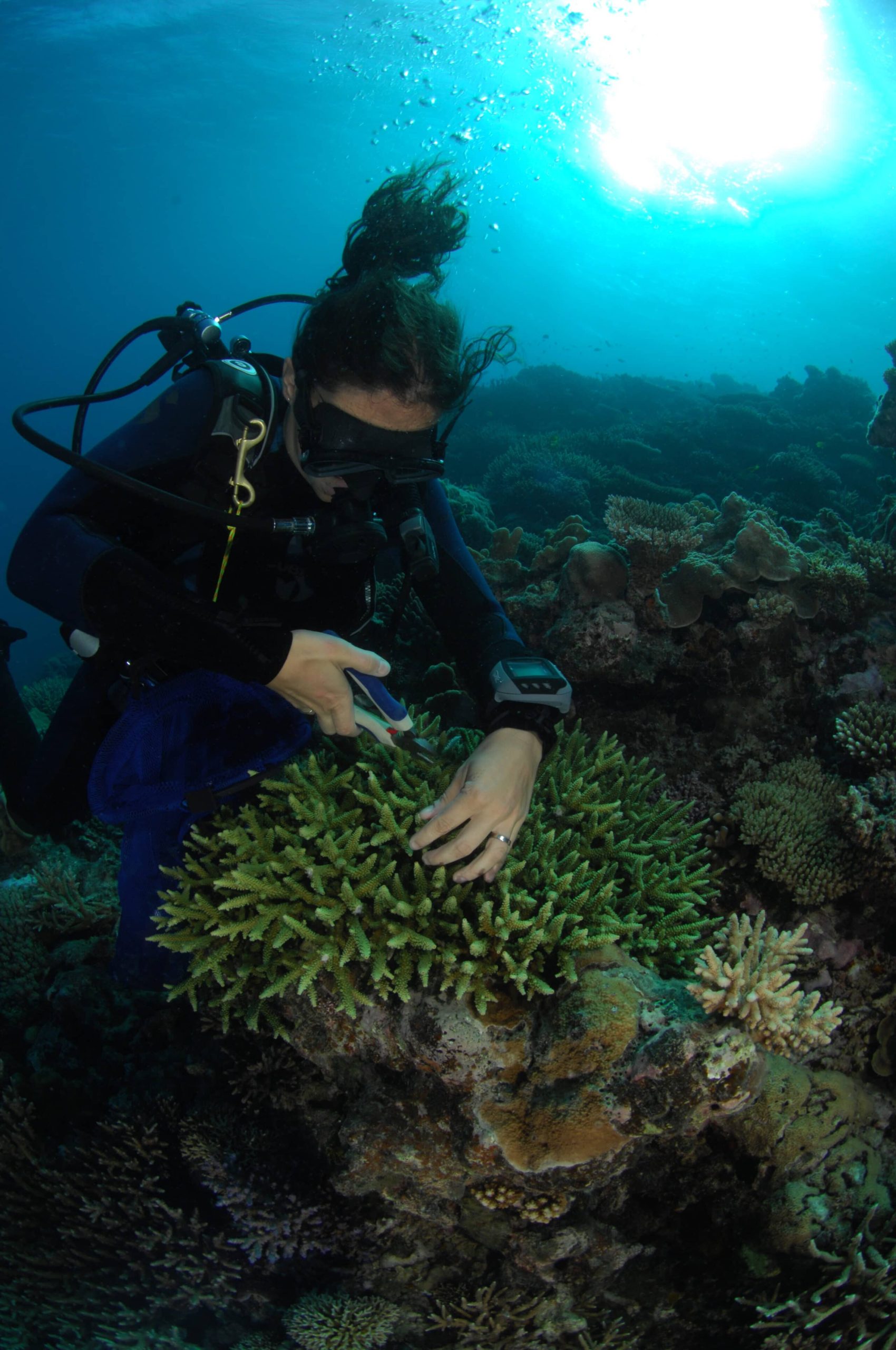
Fanny Houlbreque collecting coral samples to determine, “What does coral eat?”
Fanny collects a group of coral species at each survey location and takes samples of the surrounding seawater. The seawater is filtered to collect the plankton, which is then identified. By comparing the composition of plankton in the corals with the plankton found in the sea, it is thus possible to determine the diet of each species. She also is looking at the composition of the organic material in the water, and compares the isotopic signature of the organics with the signatures found in coral tissue. This can help her determine the benefits of additional nutrients associated with organic matter.
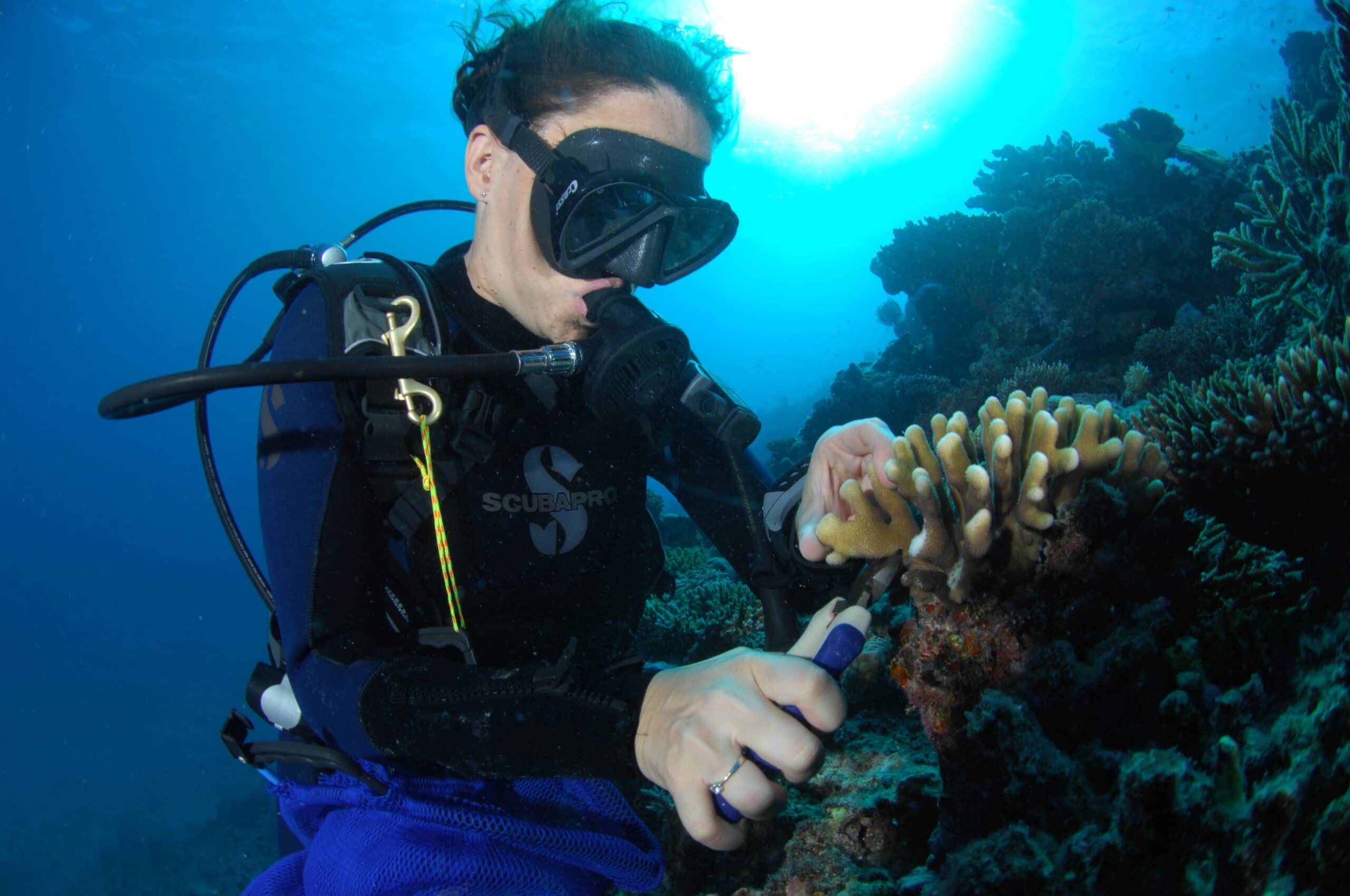
Fanny Houlbreque collecting coral samples to determine the amount of plankton and organic matter in the diet of various coral species.
These studies on, “What Does Coral Eat?” are especially relevant when examining corals close to human influences, as these will be exposed to much higher levels of organic matter than those from remote locations. The knowledge of the preferred menu of each coral could give us an idea of the most resistant coral species that might be predominant in tomorrow’s reefs.
Photos: 1-2 Erwan Amice